Measuring the Harvest
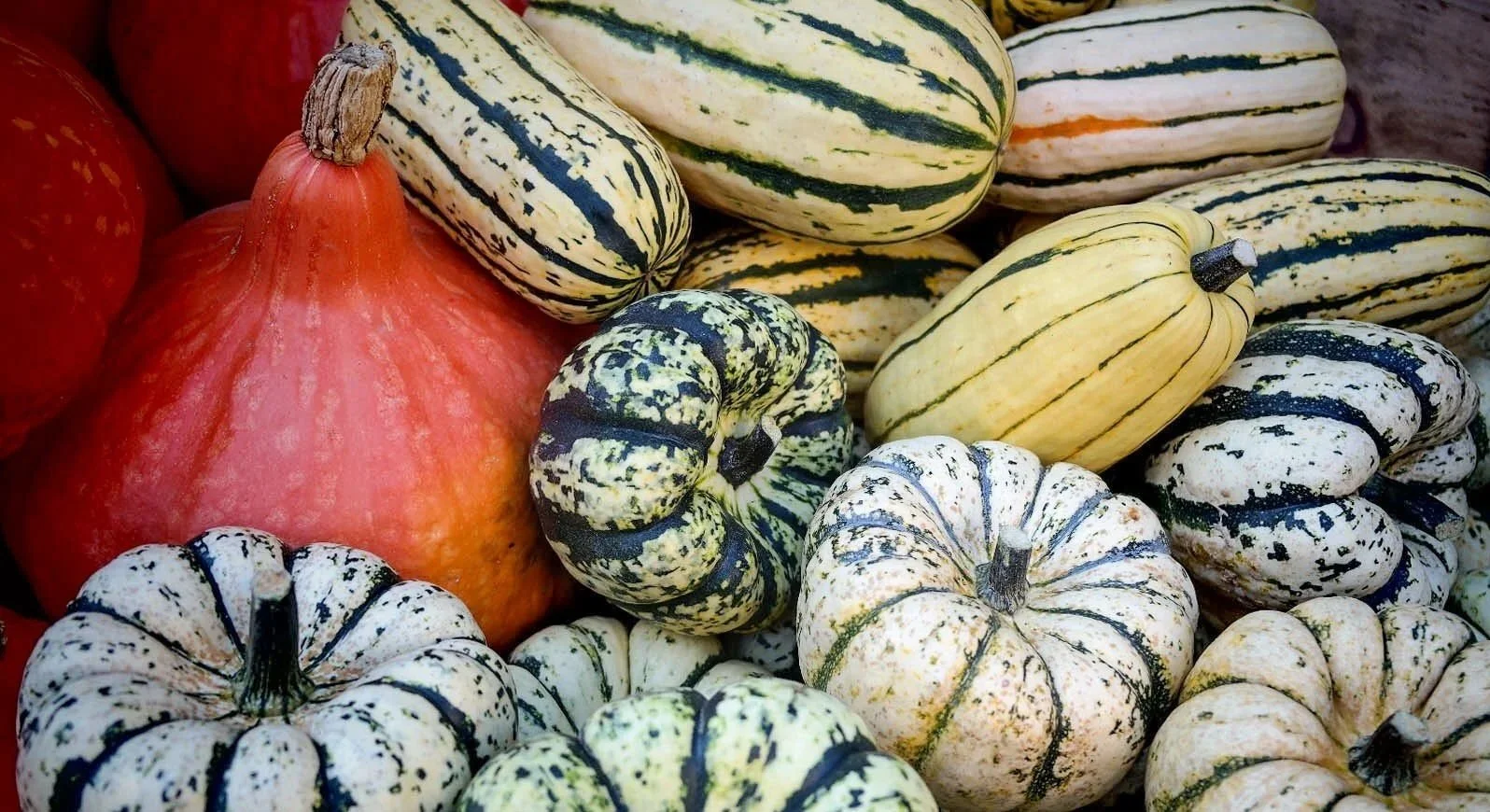
Summer officially ended this week as the Autumn Equinox launched us into peak harvest season. There are only a few winter squash still ripening on our vines, and the Portland Farmer’s Market is currently teeming with them. Pumpkins, in all their forms and for all their uses, are a family favorite around here. We’ve grown them in our garden with mixed results over the years and I’ve sworn them off completely on more than one occasion. Yet every year some variety I discovered in the pages of my High Mowing Seeds catalog, or in an Experimental Farm Network story on my Instagram feed entices me to try growing them again. I’m a sucker for an interestingly named, or brightly colored and storied gourd. So many of M’s (and my) favorite foods include pumpkin or squash that it’s easy for me to get lost in the endless varieties and what makes each one unique.

M’s currently digging into learning the specifics of each winter squash varietal - she’s like me when it comes to names and descriptions, she wants to know and share all the details. We’ve been checking the progress of our squash plants together for many weeks now, and she loves to tell me that the pint-sized honeynut adjacent variety we’re growing, called “Brulee,” looks like it’s the baby of our two big “Bethlehem Market” butternuts - both seeds hailing from EFN’s online store. The oblong pixilated squash are called “Candystick Dessert Delicatas” that we selected specially for their sweetness have captured her attention in full, and now whenever we see them at the farmer’s market, she gravitates right toward them and we have to bring home at least one, despite having a handful in our pantry from our garden. We grew a handful of new varieties of squash this season, and I’ve also enjoyed getting to know this family of garden gems better. Another favorite for us both is the round and vibrant Japanese Red Kuri, which we learned is ready to harvest when the skin starts to lose its sheen and a fingernail swipe no longer slices easily into the dark red-orange skin.
Our signature pumpkin however is the Long Pie, which we now grow from seeds we scooped out and saved from past harvests, originating from ones we bought through Fedco, another one of our favorite seed purveyors. I love how these extra large squash are regularly mistaken as zucchini when friends and family tour our garden, until we let them get enormous and start to turn orange. These pumpkins hold an extra special place in our hearts and we grow them largely for nostalgic purposes, though they are also our favorite variety for their flavor, size and culinary versatility. Long Pies are M’s favorite pumpkin, and have been since she was a toddler. I always smile when planting their seeds in the spring, remembering her two-year-old's insistence on hugging a big Long Pie, half her size, on the 40 minute drive home from Six River Farm’s onsite farmstand back in that first year of COVID in our avoidance of grocery stores.
As soon as winter squash starts showing up at the market each year, I can’t resist picking up a fun and diverse collection to explore with my students in the classroom, and for my husband, our former school chef, to turn into pumpkin-spiced everything. We made chocolate chip pumpkin muffins this week with our first ripe, homegrown Red Kuri, muffins being M’s favorite pumpkin treat du jour. My favorite, pumpkin soup, will get its moment as the cold nights creep in and we start lighting the woodstove and curling up with our craft projects under blankets on the couch by the fire. As the rest of our freshly picked squashes cure, along with the ones we picked up the other day at the market, we’ll take a week or two to play around with them and see how many ways we can use them for homeschool lessons, and dream up new tasty treats to try out.
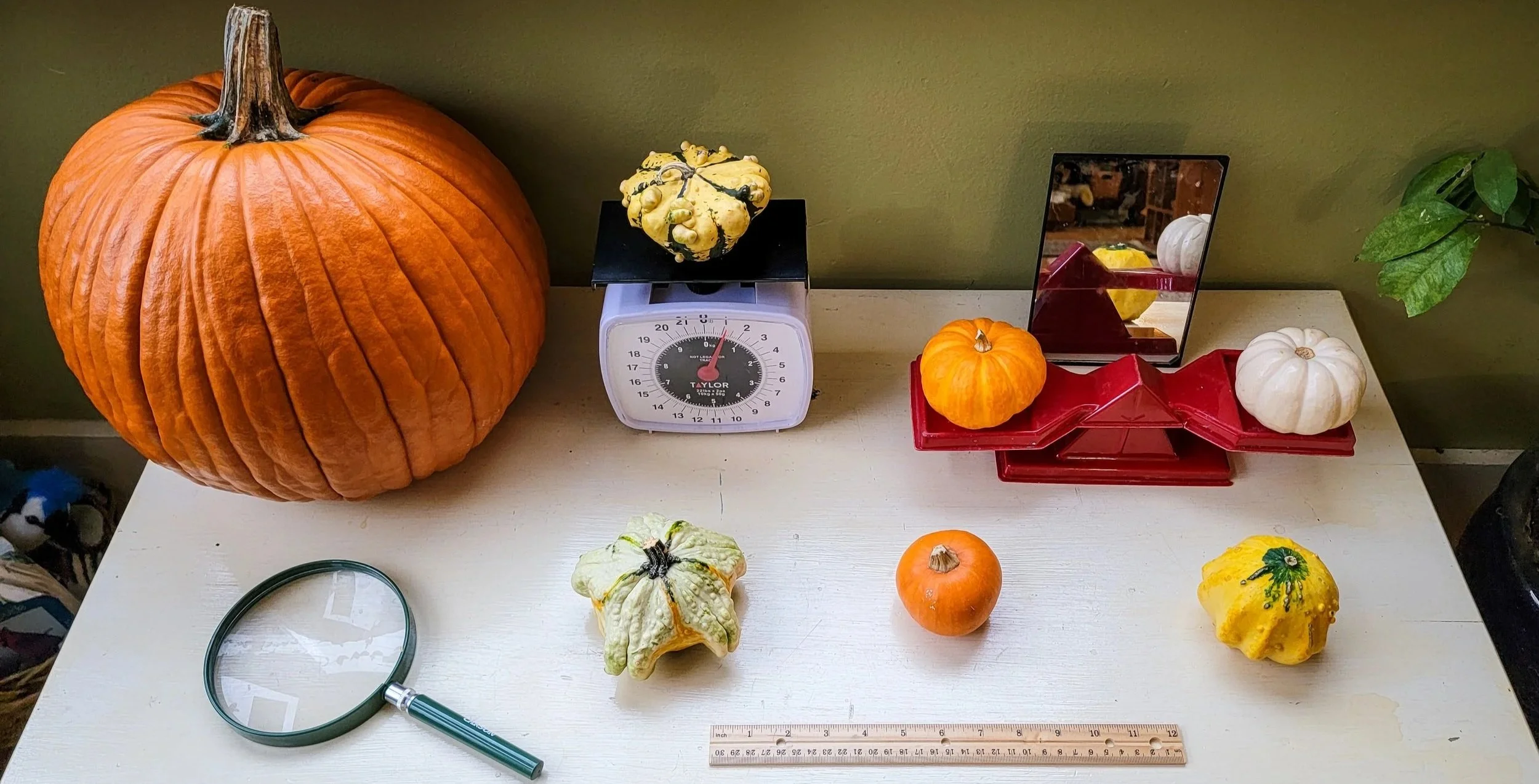
Since M’s eight now, I’ve had to level up my usual pre-k measurement play prompts to reflect where she’s at and what skills we’re currently working on strengthening. She’s come a long way with it, but handwriting practice is still something I’m trying to integrate into our curriculum whenever I can. M’s been reading fluently and with gusto for a few years now, but writing hasn’t come nearly as naturally, so we’re trying to build confidence and get her skills to a place where writing starts feeling like second nature. Math was never an interest or strength of mine as a kid, so I’ve also got my eye out for opportunities to weave a little math practice in here and there when it feels even remotely natural to do so.
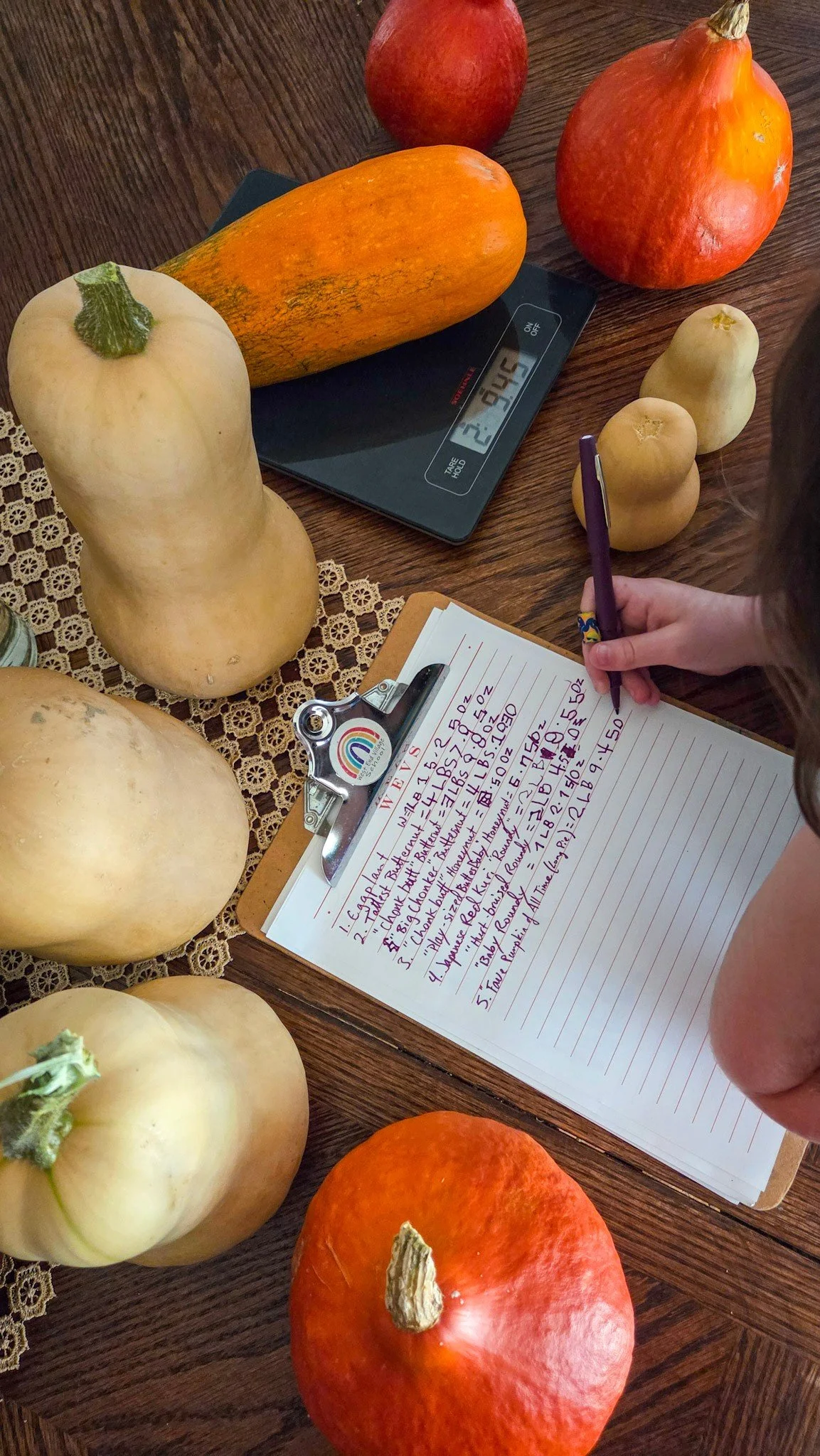
When Dylan, M’s dad, made pizzas for her birthday party recently, I noticed how much she liked helping him prep the night before, portioning out the dough by weighing chunks of it on the kitchen scale, adjusting each one so they were all approximately the same size. So after she picked out, in M’s words, a “big chonker” of a butternut squash on this week’s farmer’s market visit, I pulled out the kitchen scale and lined up all of our homegrown squash so we could weigh them and practice making comparisons. Though she lost interest toward the end and needed a bit of support and encouragement to finish the activity, she started out with genuine enthusiasm, custom-naming each squash so we could differentiate them in our documentation.
All said and done, we weighed, and recorded the weight of, ten squash specimens from four varieties, though one was actually an eggplant she insisted we also buy at the market due to its equally “chonky” size. To take the handwriting pressure off (and increase the chances she’d stick with it), I wrote down the names of the specimens for her, while M recorded the weight of each one in pounds and ounces. She had fun telling stories she invented about each family of squash, giving them rich backstories and plot lines as she dictated their names to me.
As we got to each group of multiples, we made predictions about which one we thought would be the heaviest, and how much we thought they might weigh. We also stretched and honed our descriptive vocabulary, finding nuanced ways to differentiate between some really similar looking squashes, working to most accurately capture the uniqueness of each. We ticked many of our curriculum boxes with this activity, but in the end, it was the authentic and joyful combo of hand-writing and math practice that carried the most weight for me with our pumpkin play that day. Well, of course that and the visions of pumpkin muffins, soup, pancakes, and pie that are now dancing deliciously and fragrantly in my head just waiting to be brought to life in our kitchen all week long.