Adventures in Seed Saving.
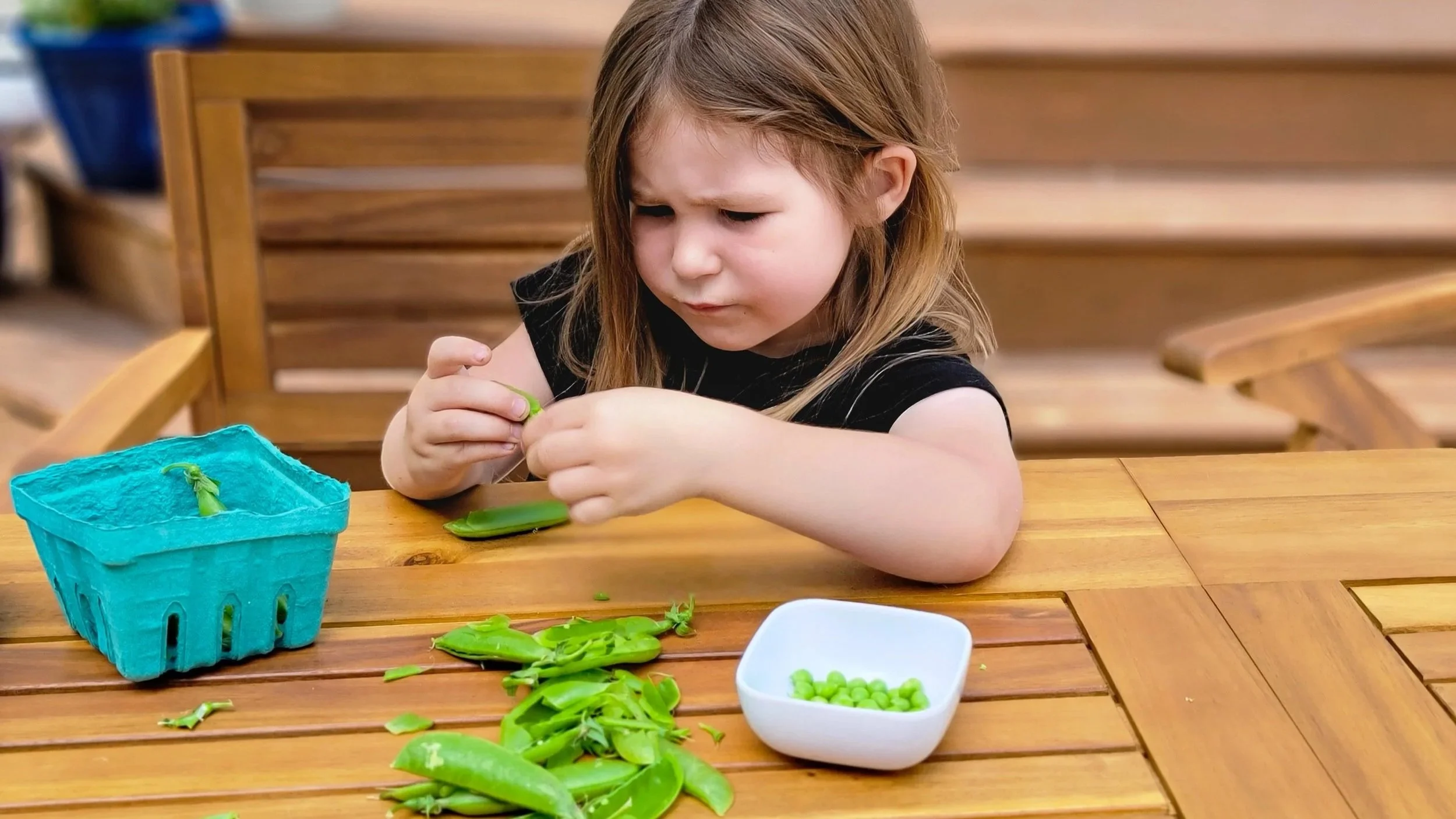
From her tiny toddler days, when we first started working on our garden, M’s been drawn to the process of growing and caring for plants. I have a video on my phone of her at 19 months old in her white teddy bear fleece with the ears on it, just moving the tomato seedlings from one patio chair to another, and then back again. But it was always the seed saving she was drawn to the most. We’d sit together on the patio table in the post-nap afternoons of early summer, plucking fat green peas from their pods and collecting them in a dish to be added to dinner.
My fondest and earliest memories of gardening with my own mother back in Vermont, are of doing this very same thing - plucking fat little peas from their waxy shell and collecting them in the silver colander, the ones I didn’t eat, anyway. There was no more preferred snack in my mother’s garden than a palmful of freshly shelled peas. M has yet to share my, and the rest of the family’s love for popping fresh peas from the garden, but I know she’ll at least share the memory and joy of plucking these special garden goodies from their pods for the rest of us to eat. And hopefully one day she’ll get curious enough to give them a try, too.
Fresh peas were where we started, so she could mush them between her little toddler fingers, and ideally sample the fruits of her labor safely. Of course M showed little interest in snacking on her bounty, she just loved ripping open the pods and plucking out the peas inside. The irony of chef and gardener parents having a picky eater for a daughter is not lost on us, but such is life. So I try to lean into the elements of the seed-to-table process that M gravitates toward most naturally, and keep the hope alive that one day she’ll get more comfortable with the table part. Once M was old enough to handle shucking dried peas and beans, she helped me build up a respectable collection of seeds from many of our favorite plant varieties. I’d never had the capacity, or enough food from the garden to try seed saving before that, so we were learning the practice hand in hand - one of our first real homeschool projects, in retrospect, but of course I didn’t think about it as such at the time.
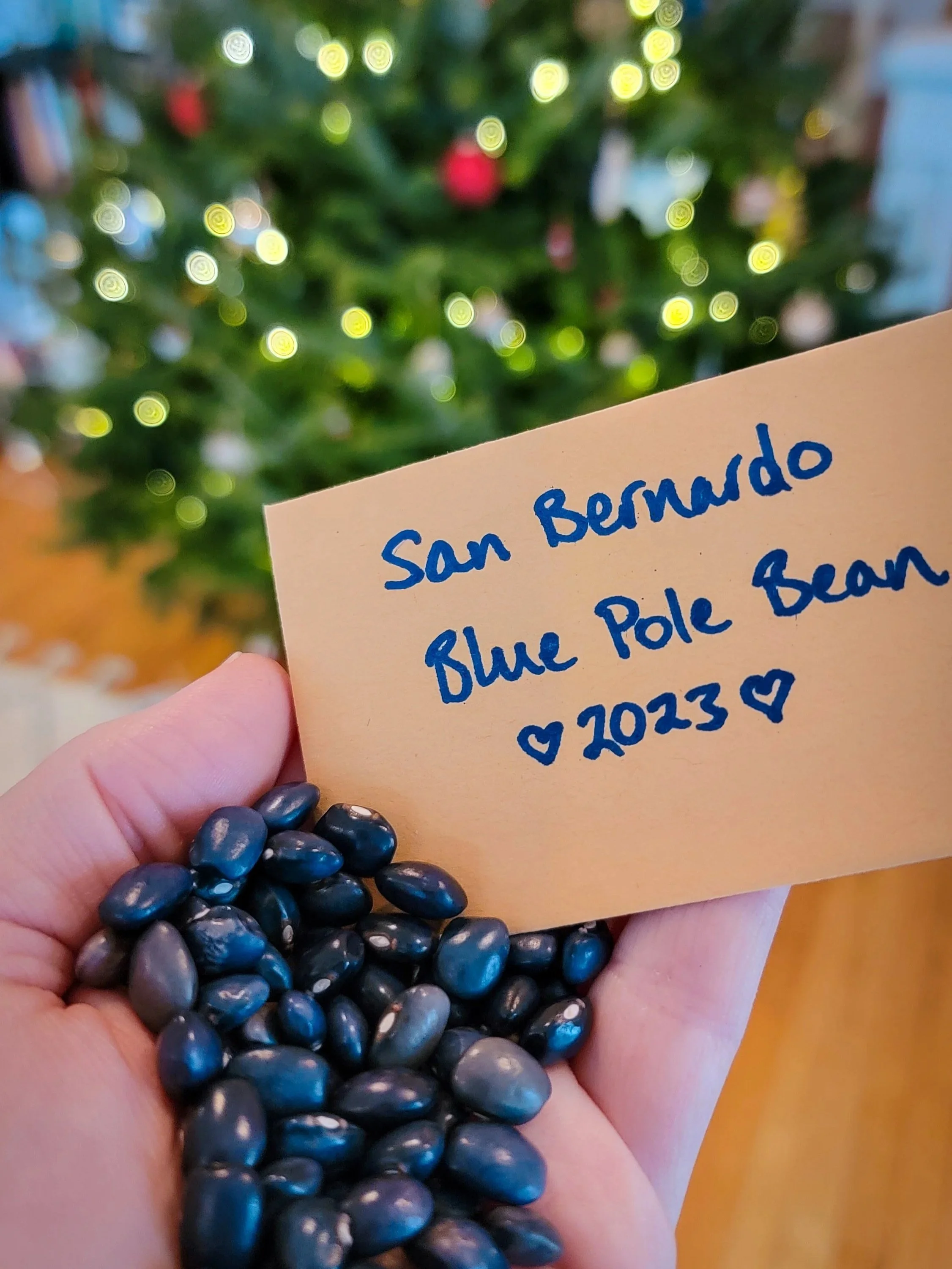
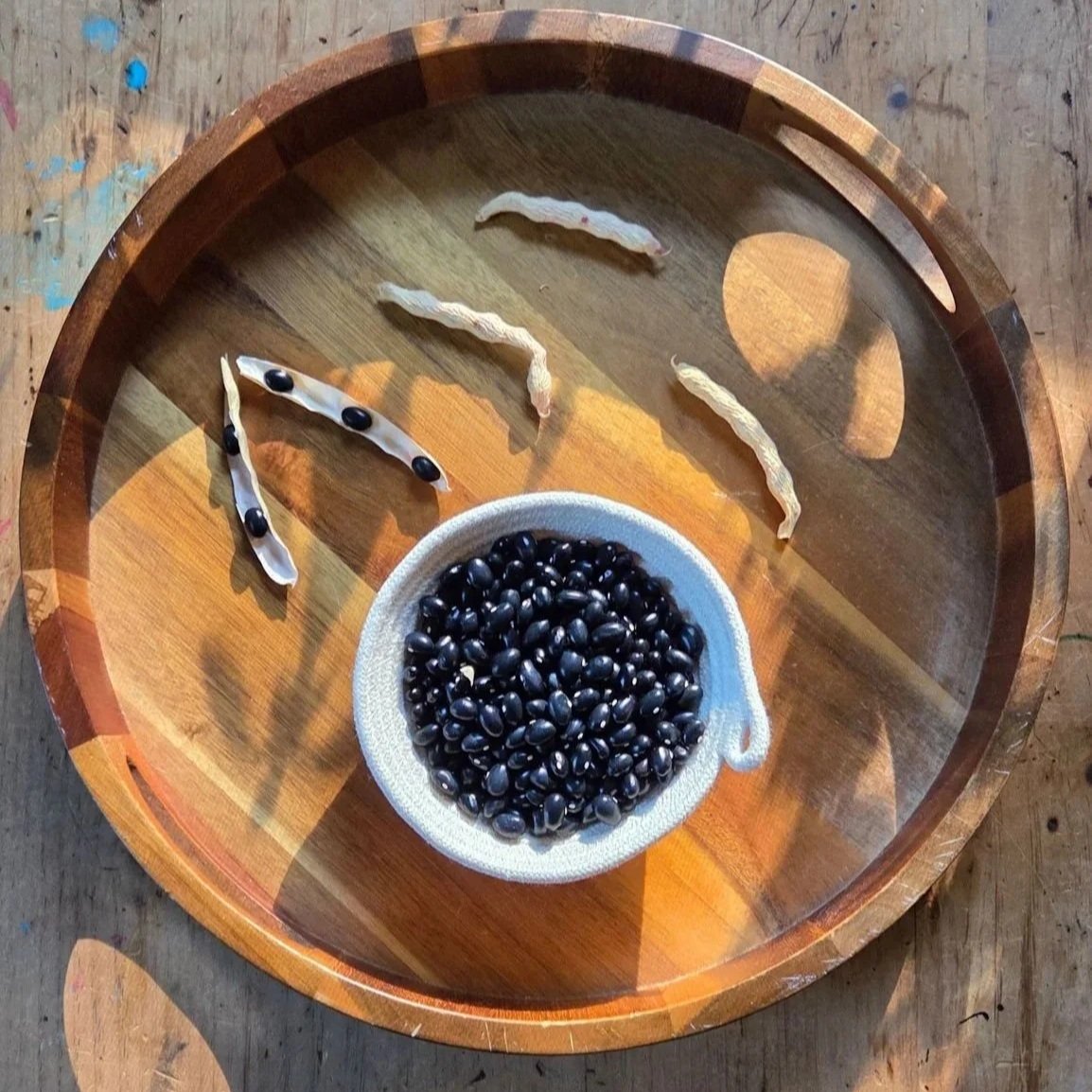
Beans and peas, as long as they are dry enough, are some of the easiest foods to save seeds from, something I learned the hard way when I over planted my beds in year two of our garden, out of fear that they wouldn’t grow well from my own seeds. They yield a pretty high germination rate it turns out, so I had to thin my beds like crazy, a mistake that ultimately led to the practice of growing pea shoots, but that’s a story for another time. That year, along with peas we saved for future crops, M helped me shuck jars full of little black turtle beans, Vermont red cranberry beans, and her favorite, the maroon and white speckled Jacob’s cattle bean. We got a few hearty batches of bean chili, minestrone and kale & white bean soups along with our seeds for the following year from our collaborative bean shucking.
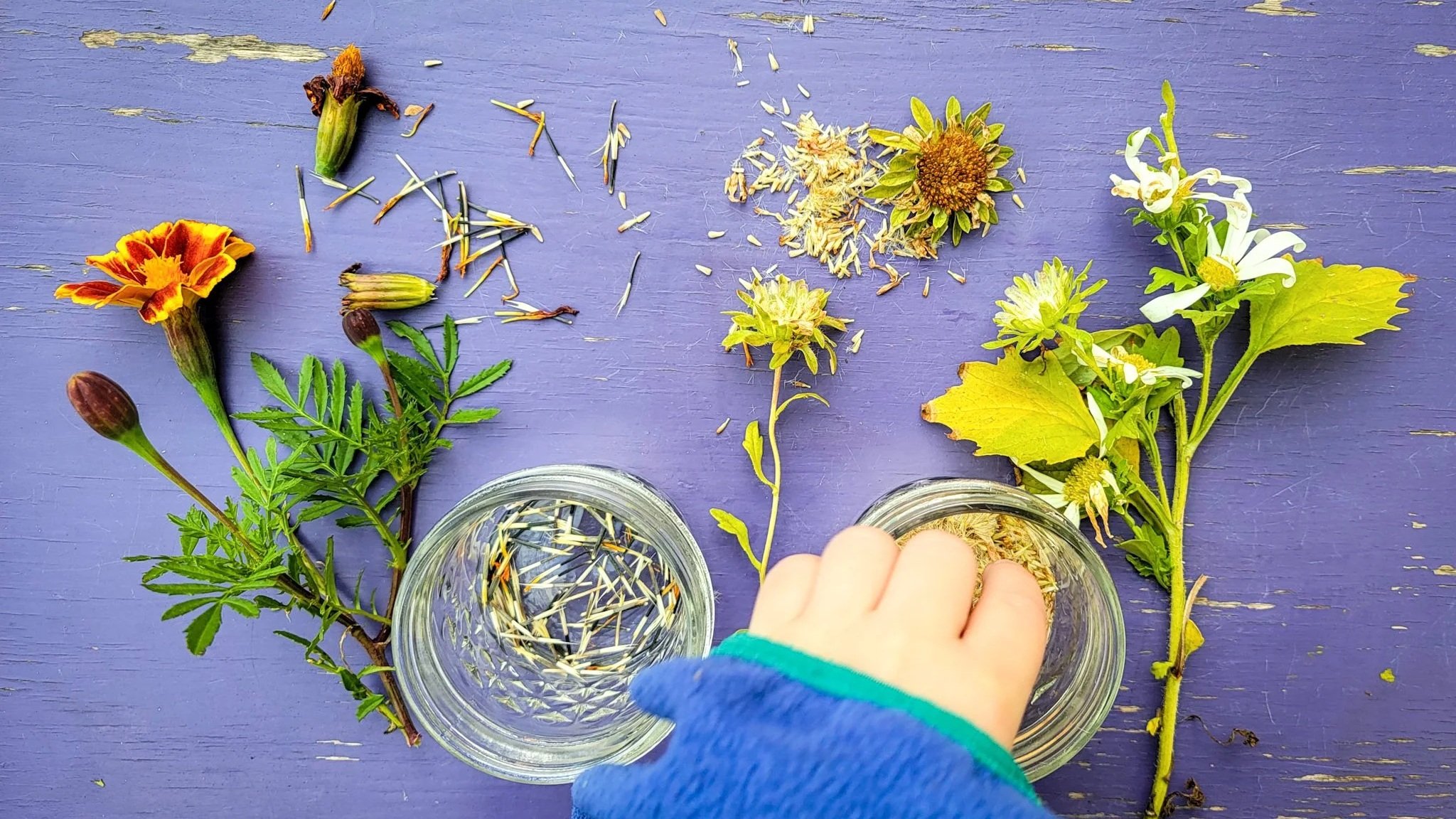
Over the years we’ve practiced growing and saving seeds for crops of peas, edamame, fresh beans, dry beans, poppies, pumpkins, tomatoes, carrots, lettuce, kale, mustard, snapdragons, chives, dill, amaranth and more. We had so many nasturtium seeds one year we pickled them and ended up with 2 jars of homegrown “capers.” It took us a few years to get the hang of it, but we now grow enough of our own garlic to feed us all year, and plant the next year’s crop without needing to buy any. That’s about 175 heads (about 25 of which become seed garlic) for our family of 4. M loves yanking the garlic roots out of the ground when they’re ready, and seeing who can find the biggest one. Once the third frond from the bottom is dry and crinkly, we know it’s go time.
As she gets older, M is becoming increasingly interested in entrepreneurial projects, she loves dreaming up ideas of different things she could make and sell. Earlier this summer I mentioned needing to trim and propagate my big ficus tree, and her proverbial lightbulb flashed on immediately. Her eyes widened and she said, “what if I could grow potted plants and sell them at a plant stand at the end of our driveway?!” We’ve be through a few iterations of her sales schemes, so it’s yet to be seen whether this idea will stick around, or go the way of her pet rock business. That one she had planned to launch on the next “International Pet Rock Day,” which came and went uncelebrated. But when it comes to this most recent scheme of hers, I will gladly join her down the rabbit hole of growing and caring for plants that she can maybe one day sell at her own little farm stand.
Having the knowledge and skills to grow her own plants from seeds she saves, and plants that she propagated herself means that she will have the ability to one day both feed herself and earn a potential living should she choose to. These are essential and life long skills, interdisciplinary by nature, and developing them is one of my primary goals for her in our years together learning in Our Homeschool Garden. To be able to spend our days practicing the basics while simultaneously digging into M’s special interests and helping her happily build the skills she’s drawn to, and getting to do it all with the garden as our classroom? It’s worth every sacrifice, and every compromise and adjustment to make homeschooling work. Watching my little scientist grow her skills and confidence as a learner, and begin taking the reins of her own living laboratory - that’s the icing on the cake. It’s all the inspiration I need to keep building out M’s custom curriculum and trying to give her an educational experience that reflects who she is and what she is capable of.