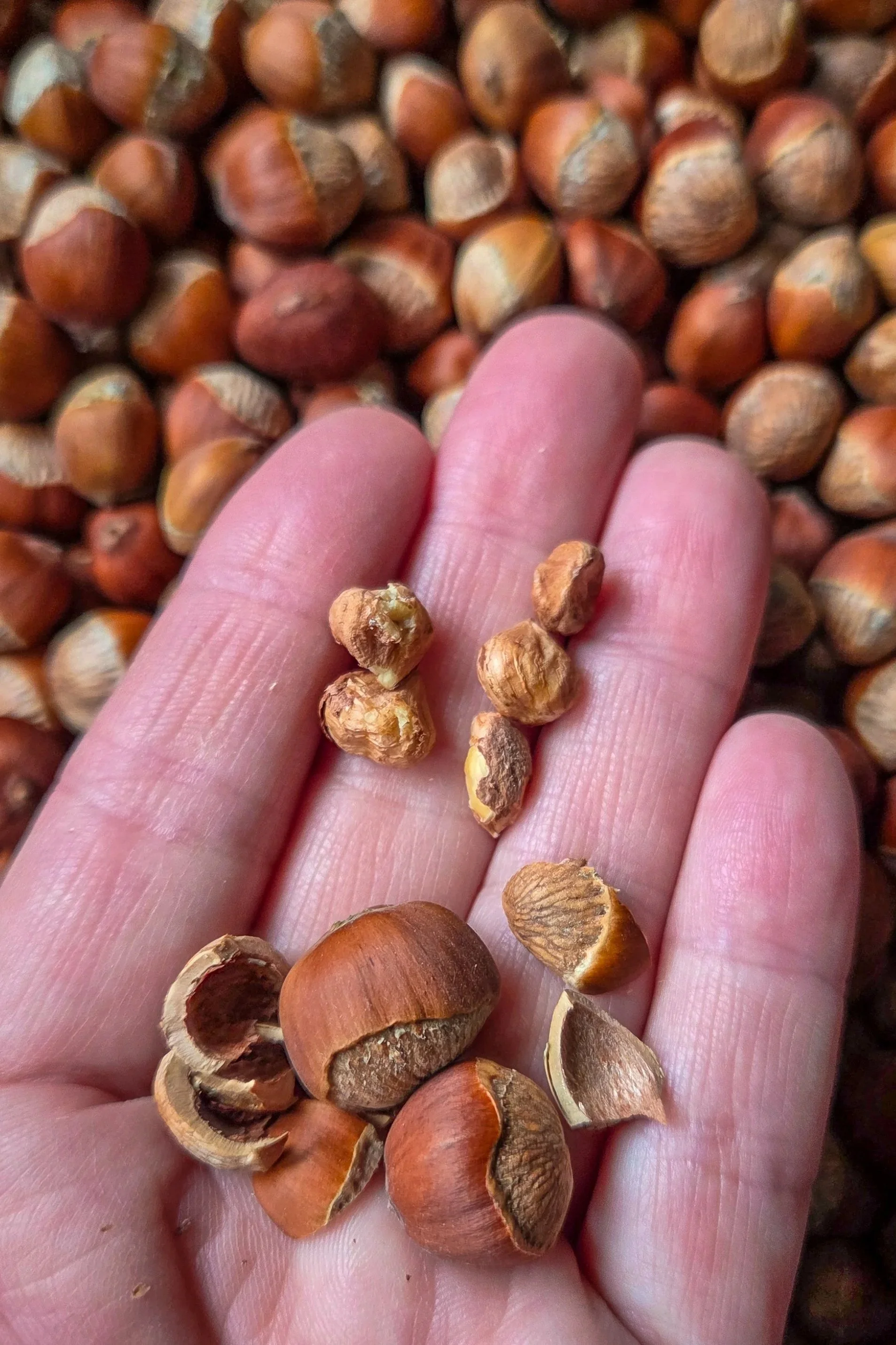
As the autumn leaves pass their peak and float down to the earth, most of the annual garden plants have died off with the arrival of the season’s first frost. There’s still plenty of harvesting and processing to be done, however. We finished shucking the hazelnuts part way through October, but we still need to crack the shells and roast the nuts so we can turn them into delicious baked goods and fancy jars of honeyed hazelnuts to gift at the holidays. Late fall involves a lot of shucking and drying of things to put away for the winter, now that I think about it. We’re shucking dry beans from their pods right now too and that’s going to take a while since M declared this year a “Bean Bonanza” and helped me plant about four times the amount of beans as we usually do. It didn’t take much convincing though, despite all the work I’ve made for my present self shucking and dividing and jarring up all these beans we grew.
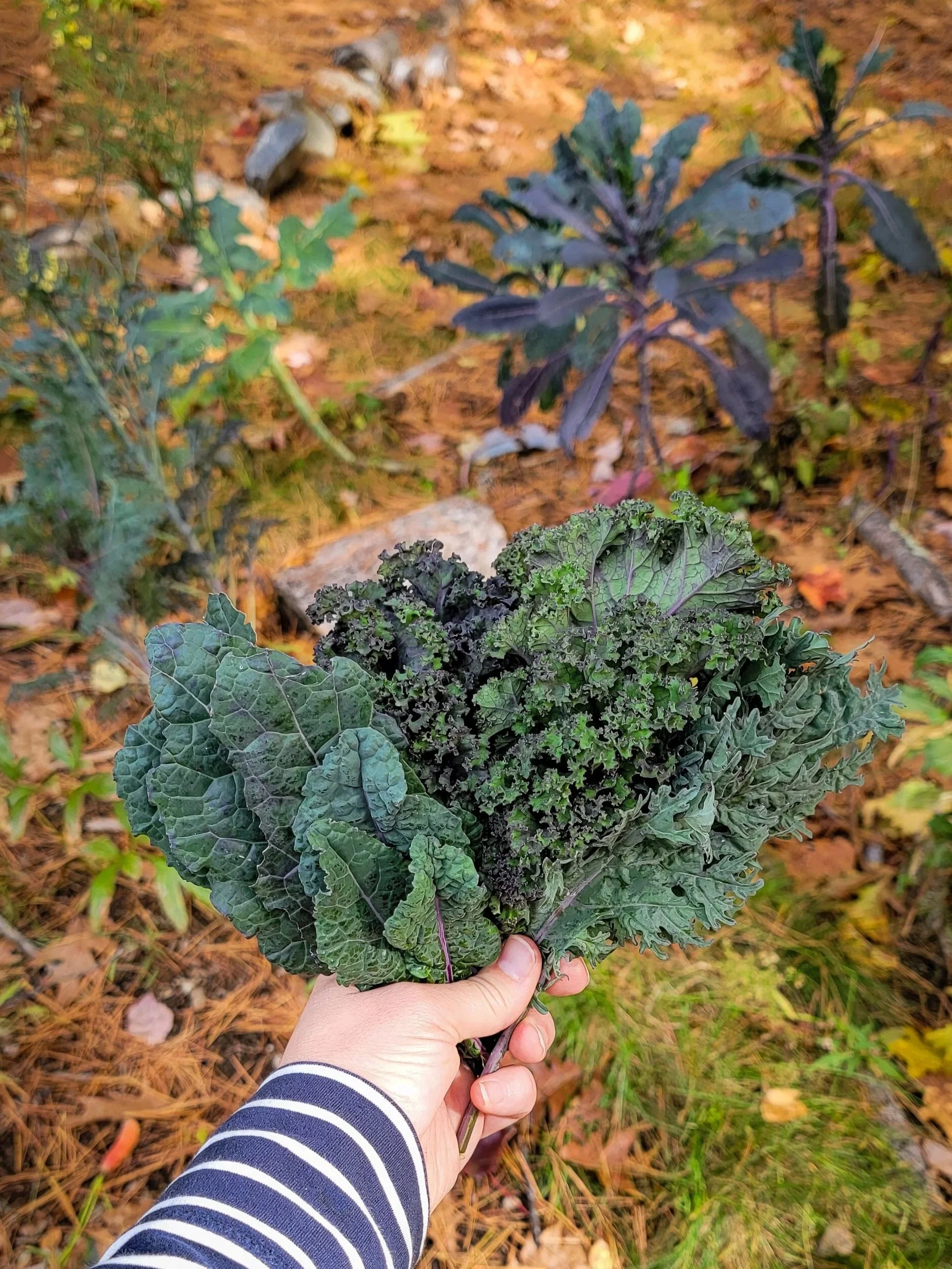
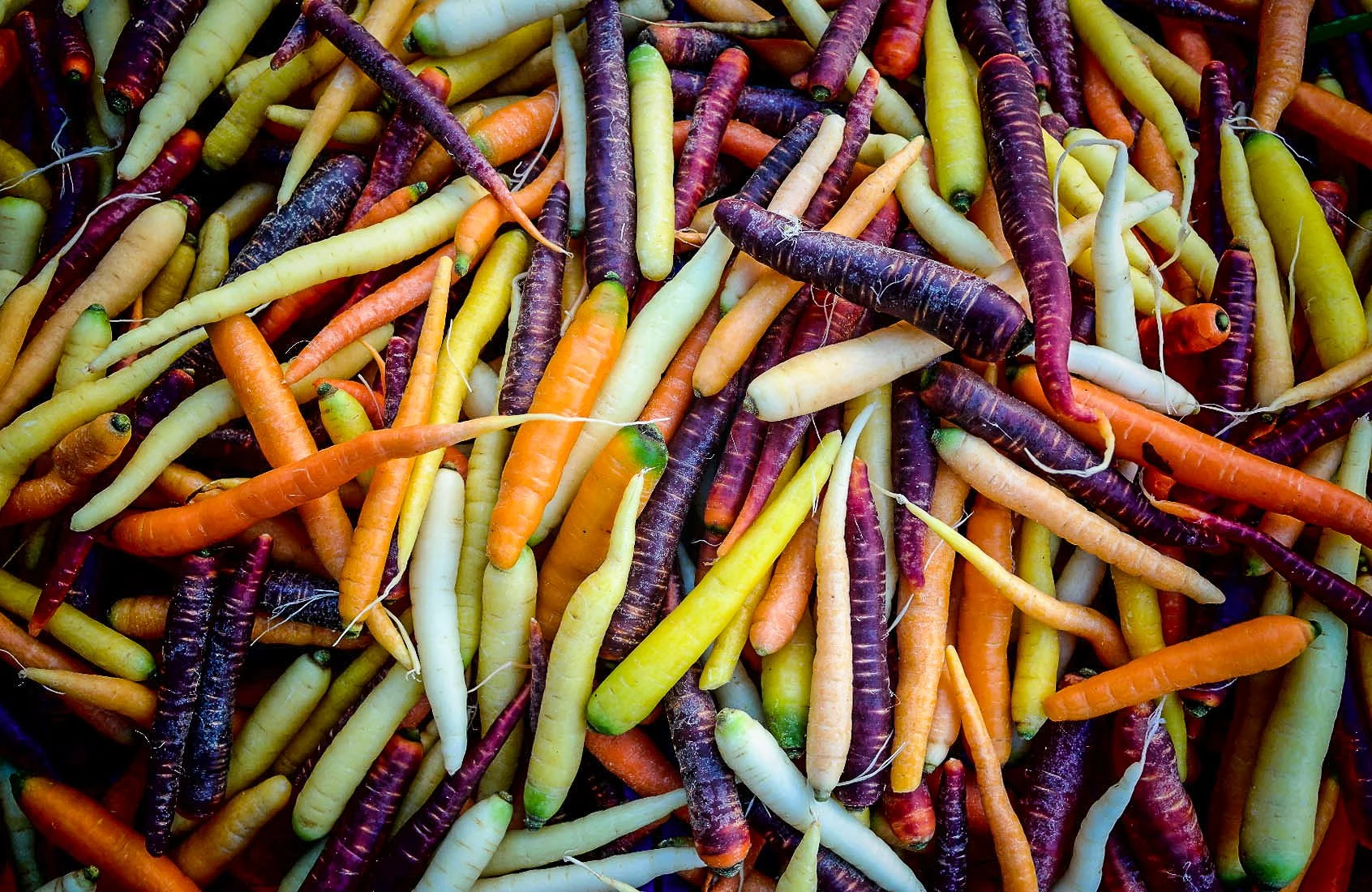
We’re also picking kale and pulling carrots as Halloween hurls us into November, when our garden begins the shift into hibernation season. M loves pulling up the carrots, revealing a splendor of sunset colors. I love inter-planting a rainbow of carrot varieties to elicit that joy of discovery and surprise. The kale brings it’s surprise in the form of heartiness. I am continuously amazed by kale’s ability to survive the cold temperatures of Northern New England. It’s a garden staple for how easy it is to grow and maintain, how it thrives in the corners of our garden where little else will, and it’s one of the easiest plants from which to save seed and cultivate your own custom assortment of cultivars. And thanks to seeds we bought from the amazing Experimental Farm Network, we now have fully perennial kale plants that thrive post-frost and are now headed looking strong into their second winter.
But kale isn’t the only greenery still producing past Halloween. We have plenty of fragrant and useful herbs that don’t mind the frosty nights and colder days. The mint won’t survive for too much longer, but there’s plenty still for picking to dry as a tea herb and turn into simple syrup for a Thin Mint hot cocoa. We dried all the frost sensitive herbs a few weeks ago, and now we’re drying the heartier ones for various seasoned salts and spice blends to gift and save for the winter. Our house Italian herb blend is a favorite of mine with dried parsley, chives, garlic chives, oregano, thyme, rosemary and a little bit of sage. This year I’m trying a French version with the same herbs as above but swapping the oregano for tarragon and the rosemary for lavender, and adding some summer savory. My favorite tea is simply three varieties of mint I grow just for this purpose: chocolate mint, ginger mint and orange mint. I’m currently working on two new one’s, a hyssop and bergamot blend, and a house licorice mix of hyssop, fennel, sweet cicely and stevia (which is a fun tea herb to grow).
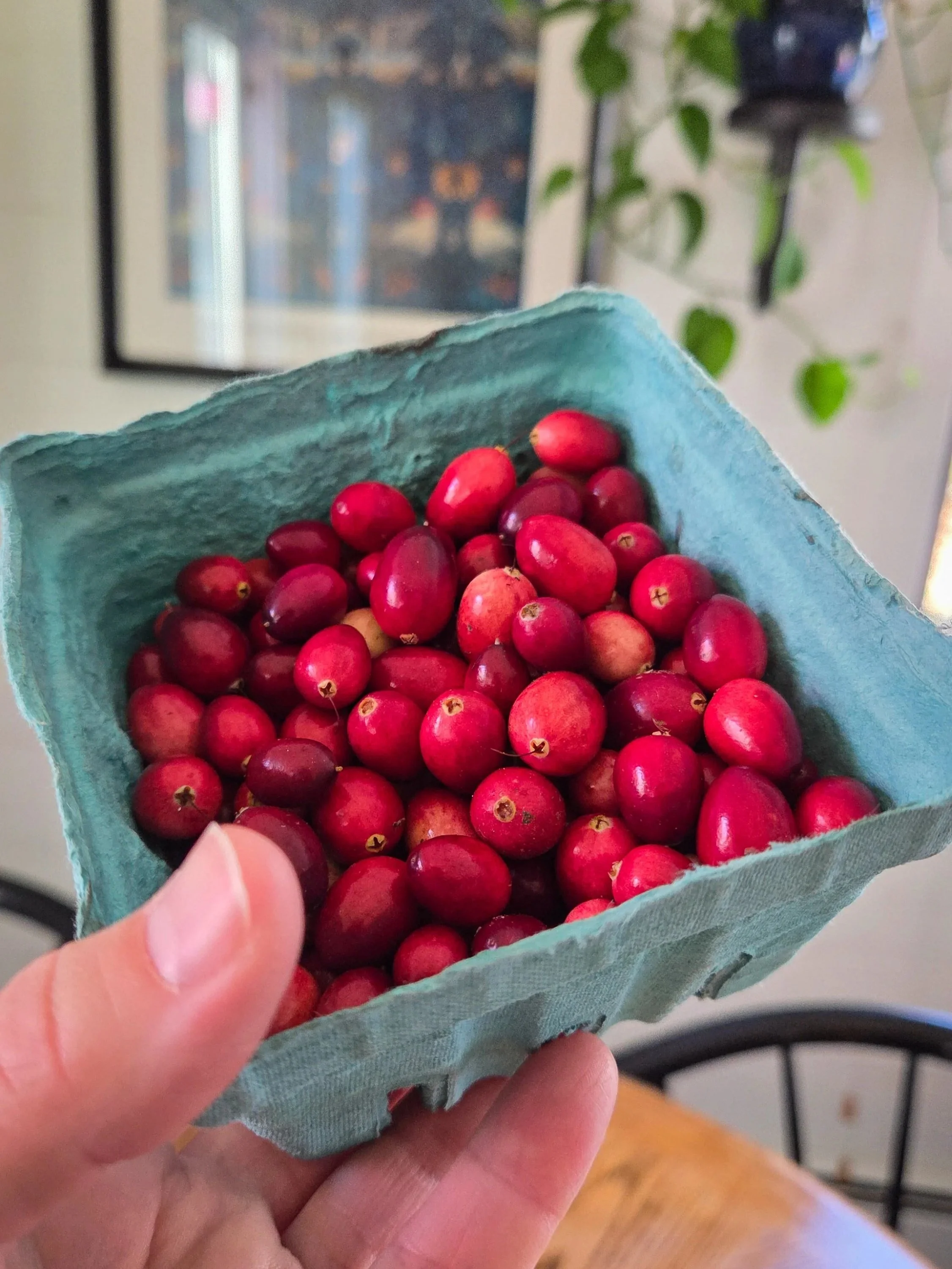
I’ve grown to really love our perennial plants and appreciate how beautiful they extend our season and reduce the amount of labor required to grow food on the scale that we’re trying to. It’s exciting to find more varieties and plant types so we can bring more and more food in from the garden at the beginning and end of the season. One of my favorite perennial late season providers this year is our cranberry patch. The cranberries are in their third season in our garden and this year we almost filled a pint carton, which should be enough to make the classic homemade sauce for our extended family turkey dinner in a few weeks. I don’t know how much more this patch will expand where it’s at right now, but I’m game to find out.
I haven’t let myself browse any of the current seed sales, or dream about next year’s crops just yet, but give it a few more weeks and there will be all kinds of new and exciting perennial goodies dancing around in my head like sugar plums. Time will tell how long I can resist adding a few more to our collection. Every year we seek out new ways to both extend our growing season and reduce our work load in the garden by planting crops that grow and maintain themselves once established. It’s a long-term committment but if you can stick it out, the result are proving quite rewarding now that we’re wrapping up our sixth garden season here in our corner of Maine.